Issue #68: I Never Understood Bonds. So I Locked Myself in a Room With Them.
The bond market prices everything you own.. and most investors couldn't explain how it works at gunpoint.
By Leon · · 4 min read
First sent to Tailwind Macro subscribers on August 30, 2026. Letters are published here 3 weeks later; members get the calls live.
Quick note: different twist on the weekly newsletter today. We’ll do a short but deep dive into bonds (I promise.. it’s definitely worth your time).
We’ll start with a quick overview of the live portfolio & book.. but if you want a more comprehensive analysis, check out this weeks YouTube video below.
Portfolio (no changes):

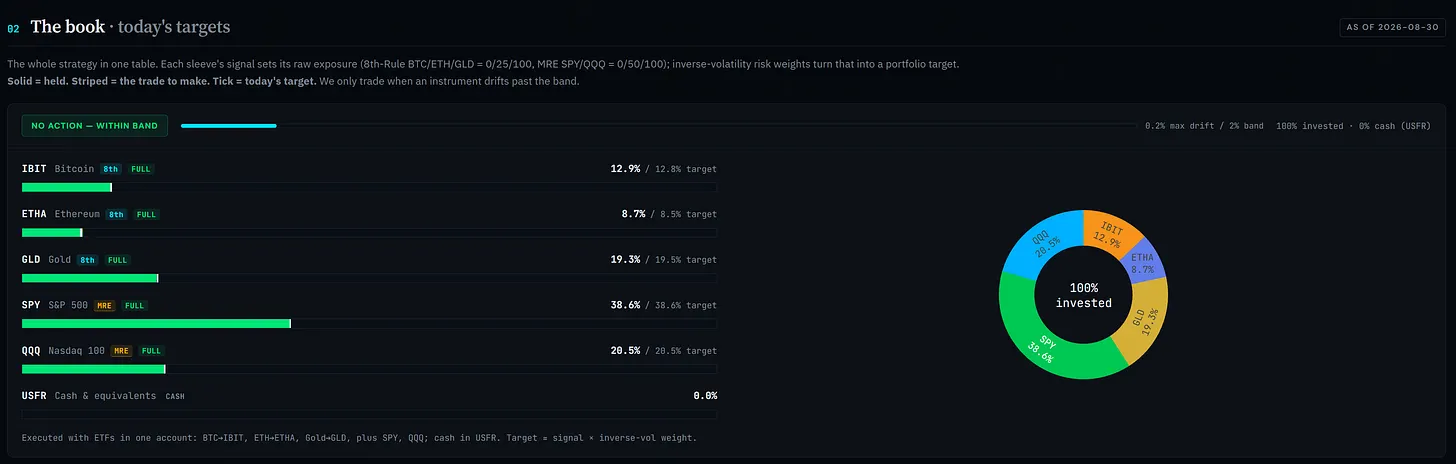
Book (no changes):
Youtube Analysis:
With that out of the way, let’s dive into.. Bonds.

Bonds are Boring. Brutally benign. Belligerently barren. But I digress.
Bankers make things overly complex, not out of outward malice but in my opinion, out of scorn for ‘dumb money.’
Kids don’t get taught about investing, compound interest or amortization schedules in school and that’s probably on purpose (at least not here in burger-land). Keep them dumb, distracted & poor. That is how the rich get richer.
Bonds (aka fixed income) are the epitome.. the peak of this knowledge gap.
I was in the same boat. I understood that the 10-year yield returned a certain percentage but I couldn’t explain to you why a bond’s price falls when its yield rises. I’d just nod along.. “yields up, bonds down".” Sure.
It always bothered me and because it was inherently ‘boring’ I’d always ignored it. Not any longer.
The global bond market is roughly $140 trillion. Take the capitilization of all the stock markets on earth, combined, and it’s still $30 trillion away from touching the bond market (roughly $110 trillion).
There’s a reason there is no r/wallstreetbonds subreddit (meanwhile r/wsb is one of the most active on the platform with 20.2+ million followers).
So I’ve been doing the research.. reading, modeling, annoying myself with questions until the lightbulb moment.
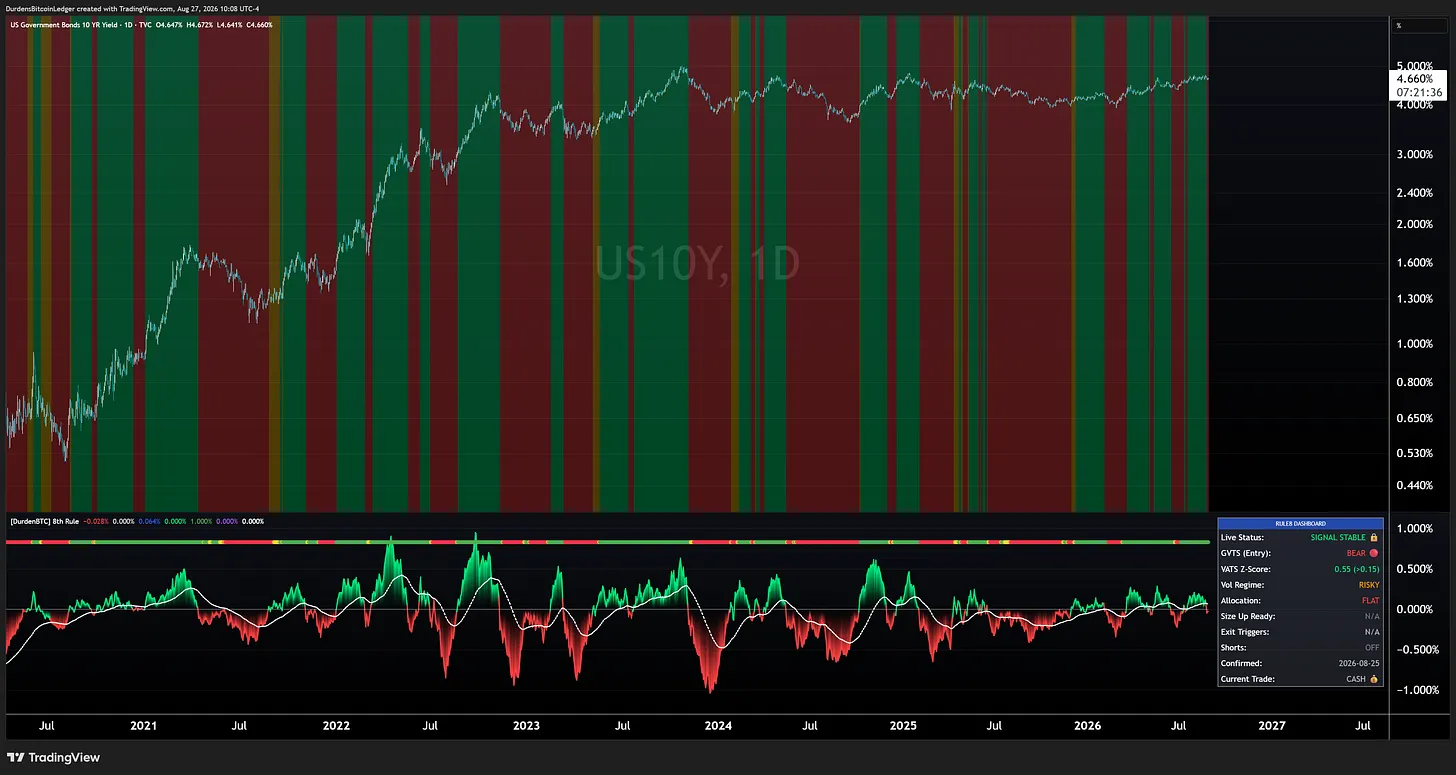
What a bond actually is (the rental property version)
Strip away the terminology and a bond is embarrassingly simple:
you lend money ($1,000)
you get fixed rent checks (say $50/yr at 5.0% as a simple example)
you get your money back at the end ($1,000 + the yearly rent accumulated)
That’s it.
A $1,000 Treasury note paying 5% hands you $50 a year, every year, then $1,000 back at maturity. Those numbers are carved in stone the day it’s issued. Nothing about the bond itself ever changes.
Let’s throw it into an actual example:
Picture a rental property collecting $50,000 a year in rent.
If you buy the building for $1 million, you’re earning 5% on your money. Now imagine buyers get nervous about the neighborhood and the building only fetches $800,000.
The rent didn’t change.. the tenants are still wiring $50,000 like clockwork. But whoever buys (the building) at the new price now earns 6.25% on their money.
$50,000 / $800,000 = 0.0625
Same building. Same rent. Lower price. Higher yield.
That’s the entire price-yield relationship. When you hear “yields are rising,” nobody is paying out more. The old bonds are just getting cheaper, because buyers are demanding a better deal before they’ll touch them.
And a bond is that rental property with a contractually guaranteed tenant (usually the government although you can buy bonds from companies, etc).
“Risk-free” is a marketing term
Wall Street calls Treasuries the “risk-free rate.” The logic: the only way you don’t get paid is if the US government goes under, and the US government doesn’t go under.
Two problems with that.
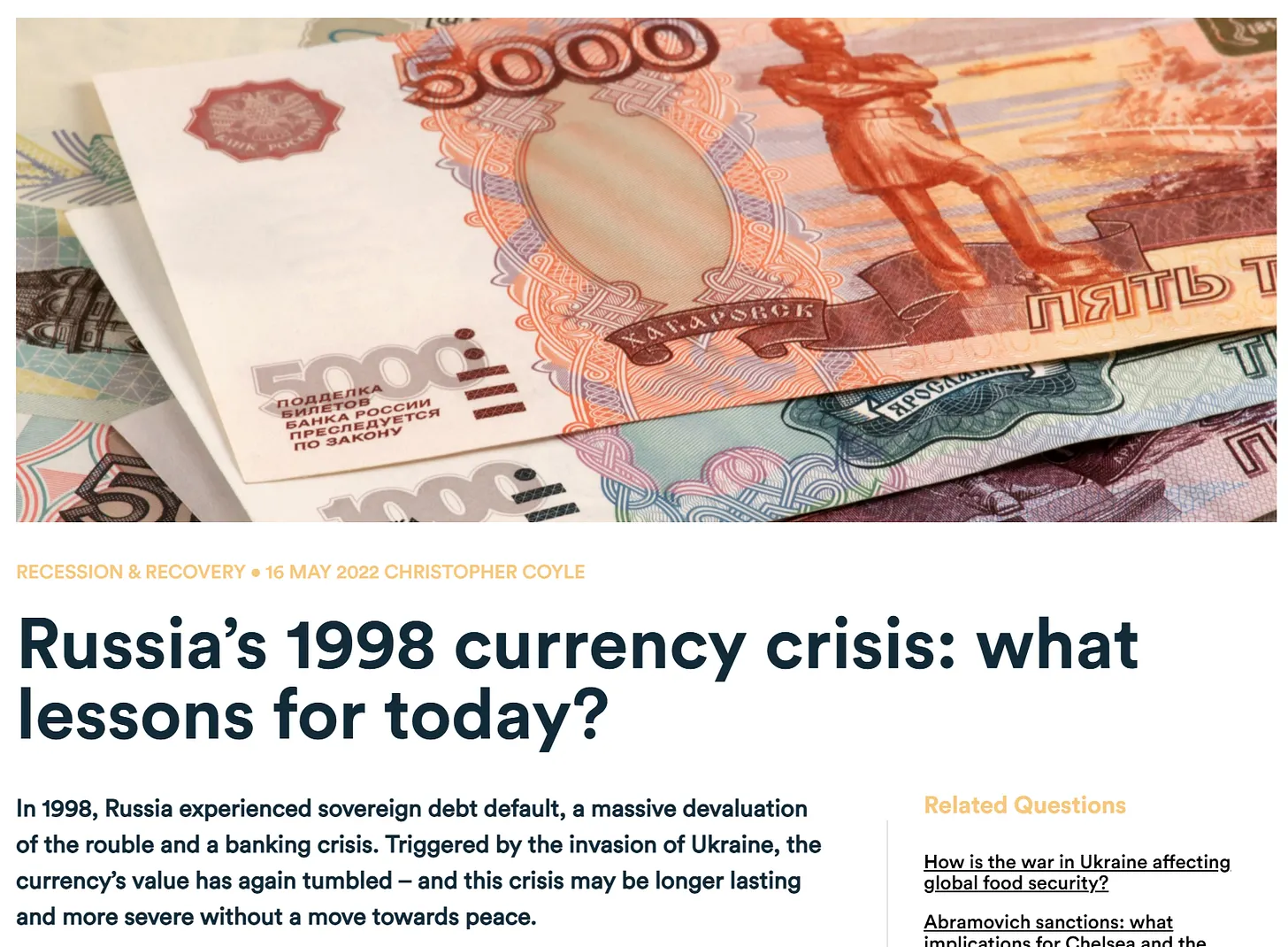
First, governments absolutely go under. Russia defaulted in 1998. Argentina has defaulted so many times it’s basically a loyalty program. Greek bondholders took a haircut north of 50% in 2012. Sovereign default isn’t a theoretical.. it’s a genre.
Secondly, a government that borrows in its own currency never has to default the honest way. It can always print the money to pay you.
You will get your $1,000 back. What that $1,000 buys when you get it is a different conversation.
“Risk-free” means free of default risk, mostly. It does not mean free of risk. The market figured out the difference in 2022 but most retail investors still haven’t.
Why I actually care (and why you should)
This isn’t academic for me, and not because I’m long bonds. I’m not.
The cash sleeve of my book when applicable sits in $USFR, a floating-rate Treasury ETF with essentially zero duration. When long yields spike and TLT holders donate another 4%, USFR doesn’t blink.. it just keeps collecting whatever the front end pays.
That was a deliberate choice, and understanding the machine above is why I can finally articulate it instead of just gesturing at it.
And the bigger reason: if the endgame for a government with this much debt is to pay you back in full with smaller dollars.. then the assets that can’t be printed are the hedge.
The book holds Bitcoin and gold sleeves precisely for the world where the bond market’s warnings get muffled instead of heeded.
The biggest market on Earth is quietly repricing the cost of money for everything you own. Worth thirty minutes of your attention. It cost me considerably more than that, so consider this your discount.
— Durden out.
✊🧼
Disclaimer: This content is for educational and informational purposes only. It does not constitute financial advice, investment advice, or a recommendation to buy or sell any asset. Trading equities and futures involves substantial risk of loss, including the potential for loss exceeding your initial investment.
Past performance, whether backtested or live, does not guarantee future results. Backtested performance has inherent limitations: it is designed with the benefit of hindsight, does not reflect actual trading, and does not account for all factors that may affect real-world execution.
The author is not a licensed financial advisor. Always do your own research and consult a qualified financial professional before making investment decisions. You are solely responsible for your own trading decisions.
Research and education, not investment advice. See the disclaimer.